
By BY CHRISTIAN L. WRIGHT from NYT Travel https://ift.tt/2Pn7lg5
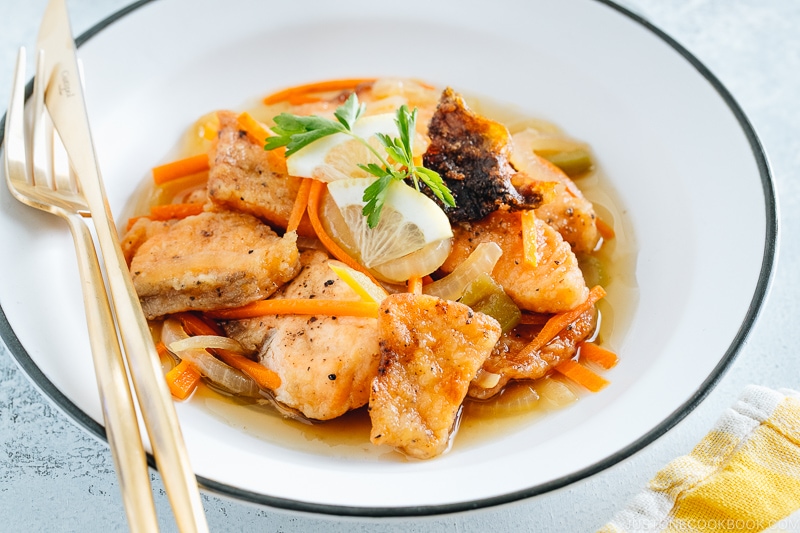
Marinated in soy dashi vinaigrette and served chilled, Salmon Nanbanzuke is a delightful seafood fare to enjoy in the summer. The unique preparation allows the salmon to store for days! You can serve it as an appetizer or a main dish. Just don’t forget to chill your favorite sparkling sake or white wine to go with.
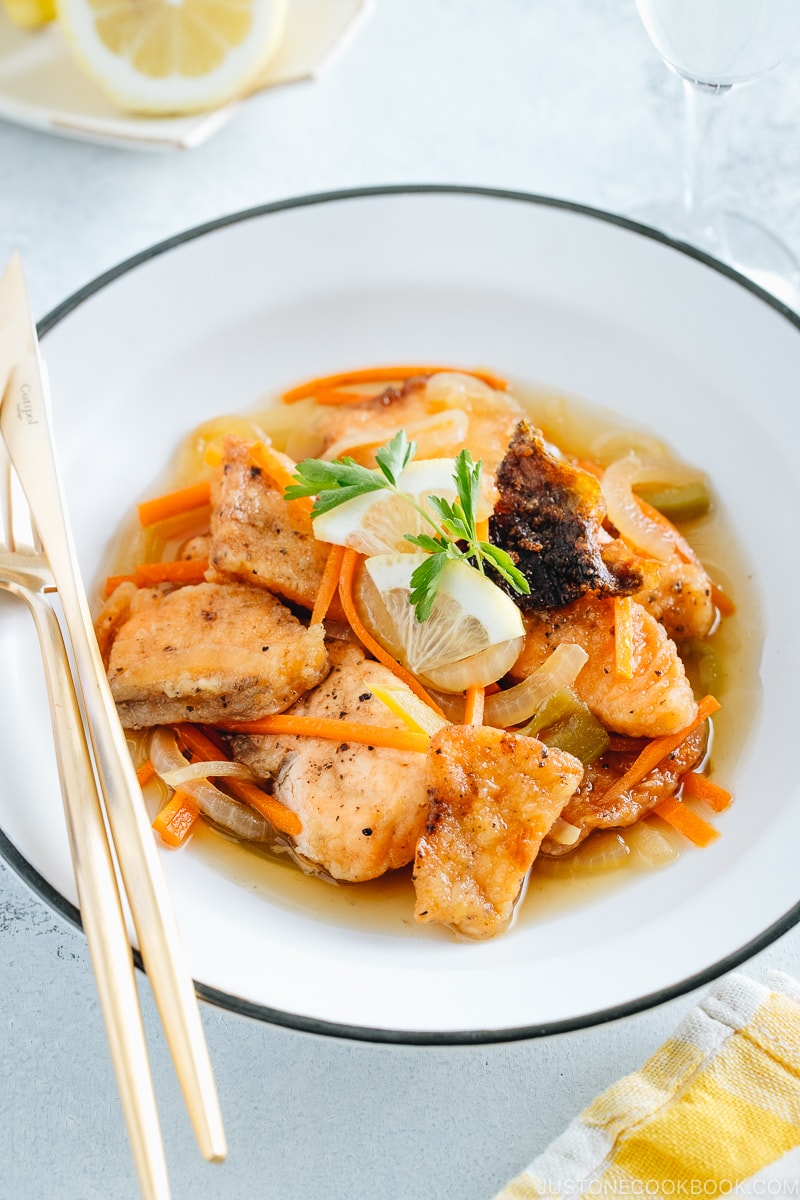
When the weather is warm outside, I crave for a meal with a simple and refreshing taste and this Salmon Nanbanzuke (鮭の南蛮漬け) is easily one of my favorite seafood fares to enjoy.
Nanbanzuke may not be on your radar when comes to Japanese food, but it is actually a popular dish enjoyed both at home and restaurants in Japan. Here, the salmon is first deep-fried and marinated in a tangy sauce along with colorful julienned vegetables. The mixture is then chilled in the refrigerator and served cold. The result is light and incredibly appetizing.
Nanban (南蛮) literary means “southern barbarian(s)” in Chinese-based Japanese words (or kango 漢語 – Chinese loanwords in the Japanese language), originally referring to the people of South Asia and Southeast Asia. In Japan, it was used for the Portuguese, who first arrived in 1543, and later other Europeans who came to visit around the 16th to 17th century.
The word “nanban” also referred to something foreign and exotic, such as nanban kashi (南蛮菓子, foreign sweets) like Catella, or food with exotic spices, marinades, and sauces like nanbanzuke, as in -zuke meaning “being soaked”.
If by any chance you are familiar with Escabeche – a fried fish dish that’s marinaded in a vinegar-based sauce in the Mediterranean and Latin American cuisines – Nanbanzuke is essentially the Japanese interpretation of that. Instead of cider vinegar and spices, we enliven the fish or meat with the concoction of the Japanese pantry such as dashi, mirin, and sake. The unique preparation ultimately helps conserve the dish that it can last for days in the refrigerator.
Besides salmon, you can also make nanbanzuke with these popular ingredients:
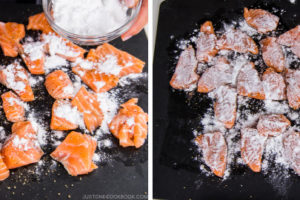
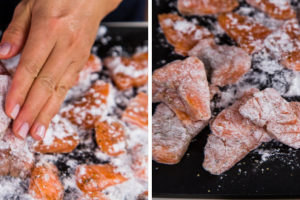
This crucial step helps to seal in the umami and juice in the fish, and during the deep frying, it acts as a protective shield to prevent the flesh from breaking apart. If you don’t have potato starch, you can sub with corn starch or wheat flour, but don’t skip the coating.
You may remember that I use the same technique for Teriyaki Salmon and Miso Butter Salmon.
Everyone has a slightly different level of acceptance when it comes to “sour” food. Before finalizing this recipe, I have tested different versions of Nanban Marinade with my family because each of them has an opinion of the comfort level of sourness. So, use my recipe as a guide. Have a taste and adjust the ratio until the vinaigrette tastes right to your liking.
Speaking of vinegar, most Japanese recipes use rice vinegar (米酢). It is milder in taste and not as “sour” as other kinds of vinegar. If you plan to make Sushi Rice (for making sushi), Cucumber Salad, and Japanese dressings, I highly recommend looking for rice vinegar.
For the summertime, I like to use a bit more vinegar for extra tanginess.
The most important technique for delicious Nanbanzuke is to marinate the fried salmon as soon as it’s out of the oil. Remove the excess oil by shaking it off and dunk the salmon into the marinade. The hot fried salmon absorbs the flavors most.
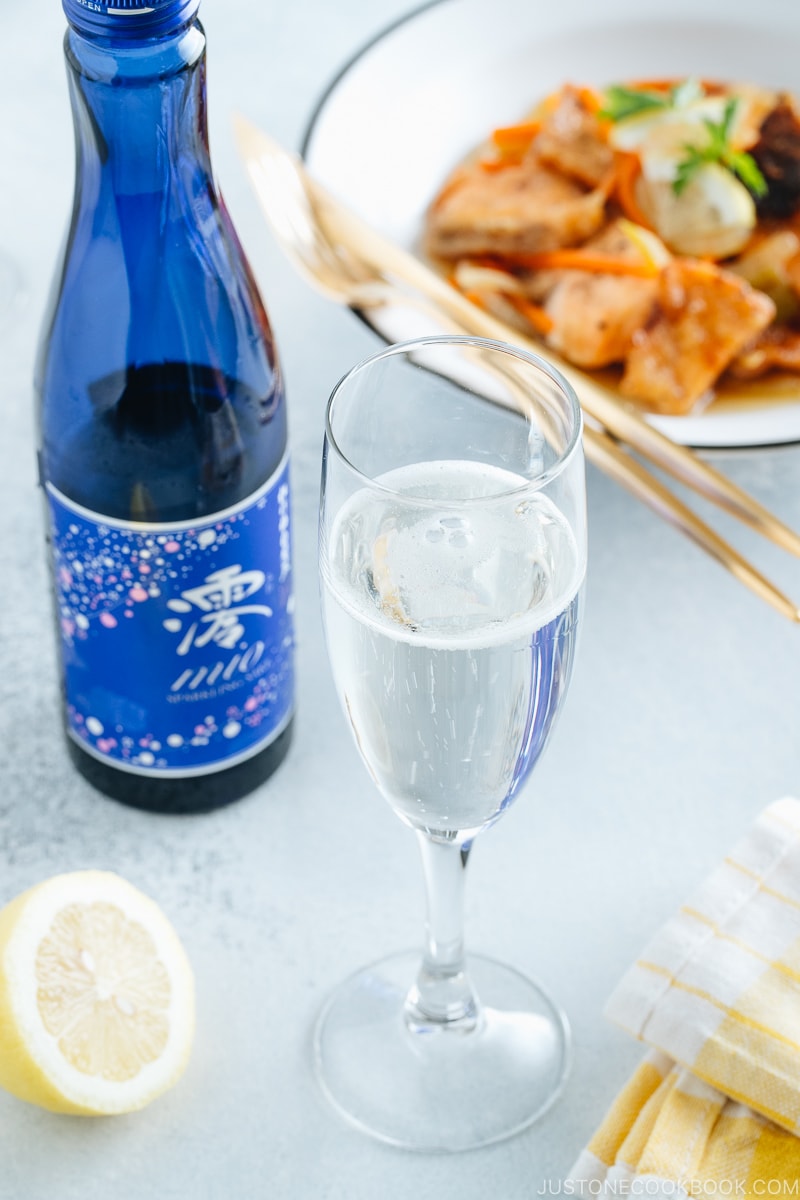
For this Marinated Fried salmon with Vegetables, we paired it with Sho Chiku Bai Shirakabegura MIO Sparkling Sake. The sparkling sake is similar to a fruit cider, with flavors of apple, pear, and summer fruits.
The sweetness and fruitiness of the sake match the vinaigrette really well and the tiny bubbles clean the palate so you’re always ready for the next bite. We love this sparkling sake with summer meal like Salmon Nanbanzuke.
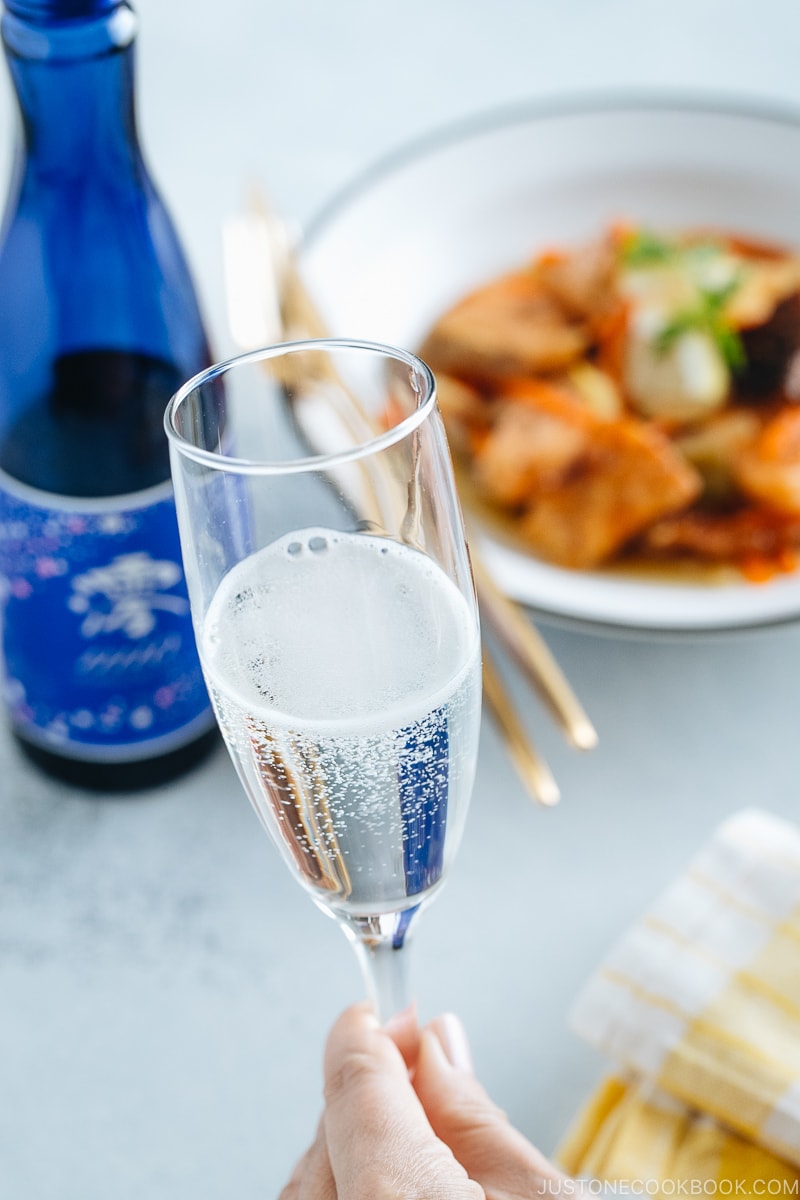
Cheers! I hope this easy salmon dish will be another favorite of yours!
Japanese Ingredient Substitution: If you want to look for substitutes for Japanese condiments and ingredients, click here.
Sign up for the free Just One Cookbook newsletter delivered to your inbox! And stay in touch with me on Facebook, Pinterest, YouTube, and Instagram for all the latest updates.
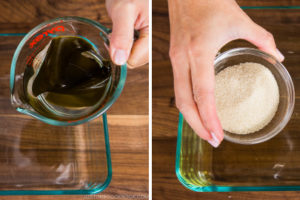
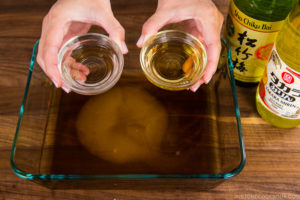
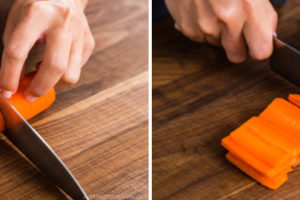
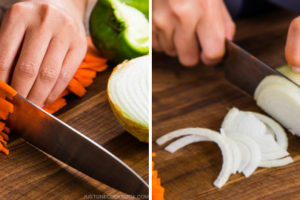
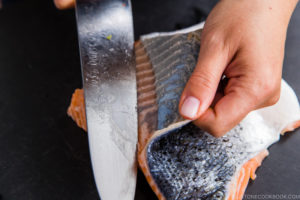
If your salmon has skin, you can easily remove it from the corner by holding the salmon with a knife in one hand and slowly pulling the skin on the other hand as you see below. Salmon skin is really delicious when it's cooked till crispy. I'll show you how to prepare below. For now, set aside on a plate, cover with plastic, and refrigerate.
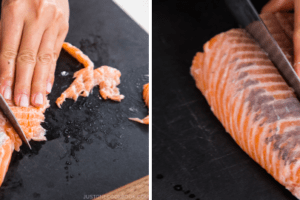
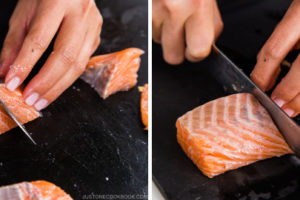
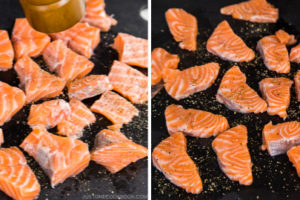
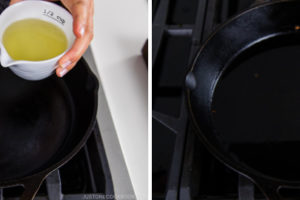
When the oil is hot, add the salmon in the pan (Do not crowd the pan as the oil temperature will drop too quickly). Fry until golden brown, about 5 minutes (depending on the thickness of the salmon). You can use this splatter screen to avoid oil splatter.
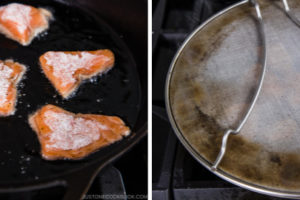
Once the salmon is cooked, shake off the oil well and transfer to the marinade while it’s hot.
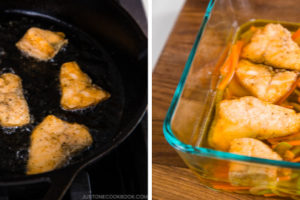
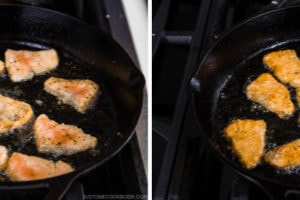
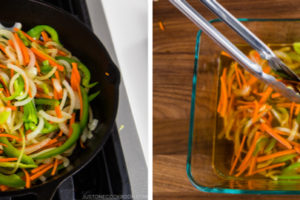
When you finish frying all the salmon, put the vegetables in the marinade over the salmon so it will be completely submerged in the marinade.
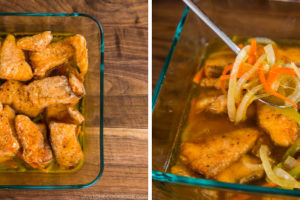
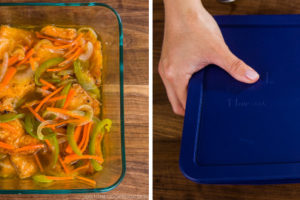
Cover the lid or plastic and refrigerate for at least 30 minutes, or preferably overnight.
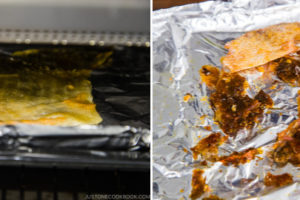
[Optional] Sprinkle salt on the salmon skin and bake at 325 ºF (160 ºC) in the oven or oven toaster for 30 minutes, or until it's crispy. The skin will cook in its own oil. Once it's crispy, break it into smaller pieces and use them as a decoration when serving.
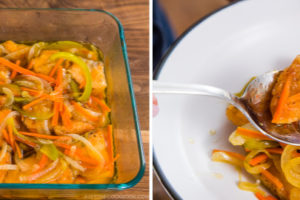
Serve the vegetables from the marinade on a plate and top with salmon.
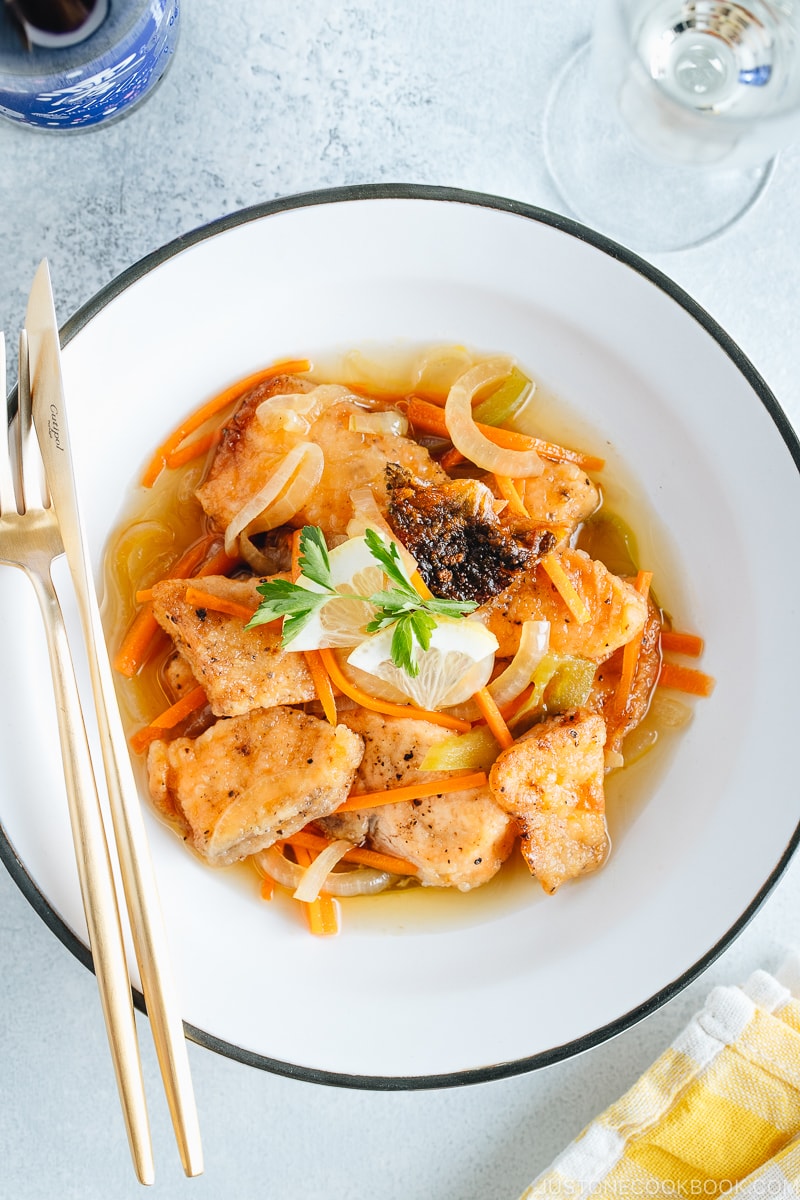
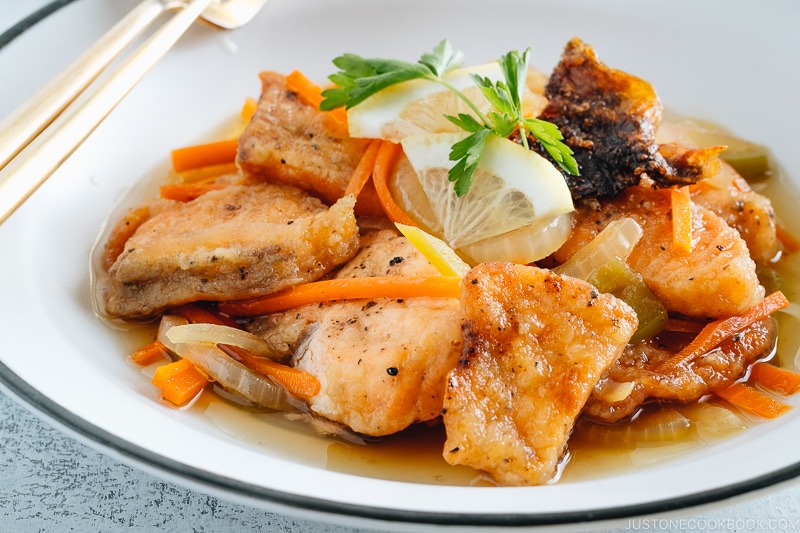
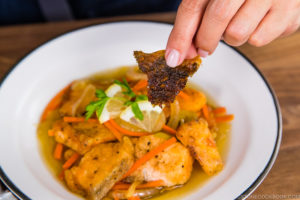
Garnish with sliced lemon, parsley, and baked salmon skin. Serve it chilled.
You can keep the dish in the refrigerator for up to 5-6 days.
Recipe by Namiko Chen of Just One Cookbook. All images and content on this site are copyright protected. Please do not use my images without my permission. If you’d like to share this recipe on your site, please re-write the recipe and link to this post as the original source. Thank you.


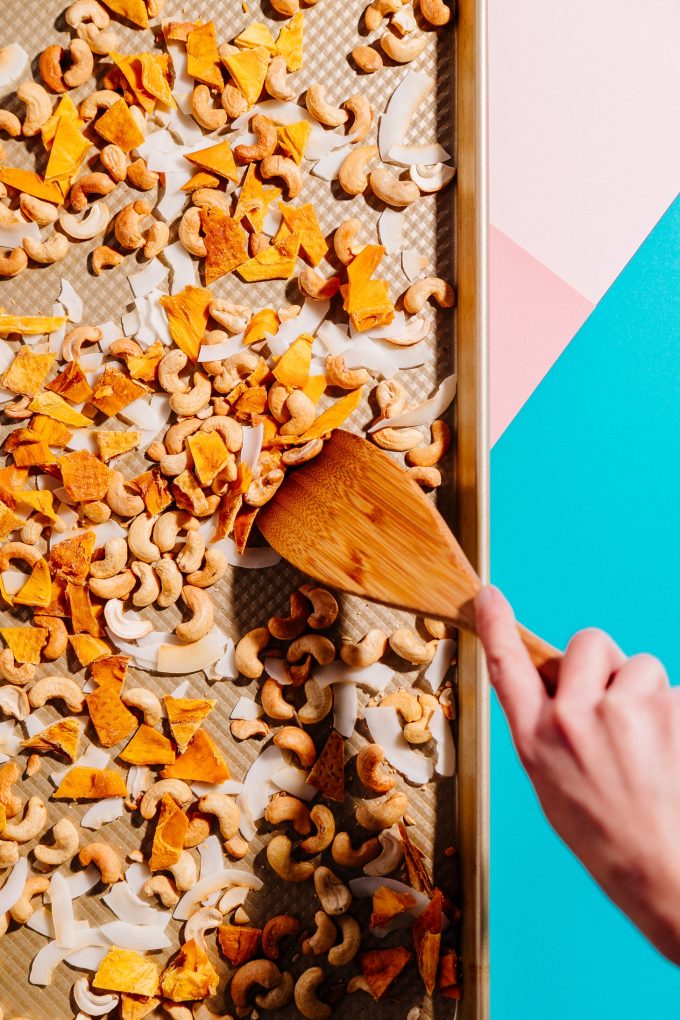
Do you like to travel, take road trips, or go on hikes?
If you’re like us and are always in need of a snack but don’t like what most airports and convenience stores have to offer, make your own!
We like to take this trail mix on adventures and find that it is perfect for fueling us between meals. Plus, it’s made with just 3 ingredients and only requires 20 minutes and 1 pan!
3-Ingredient Tropical Trail Mix from Minimalist Baker →


Tired of boring, bland, chewy chicken? Adding a simple marinade to your chicken will easily enhance the flavor, juiciness, and tenderness of your chicken. In this post, get my tips for how to marinate chicken plus grab my 7 favorite chicken marinade recipes.
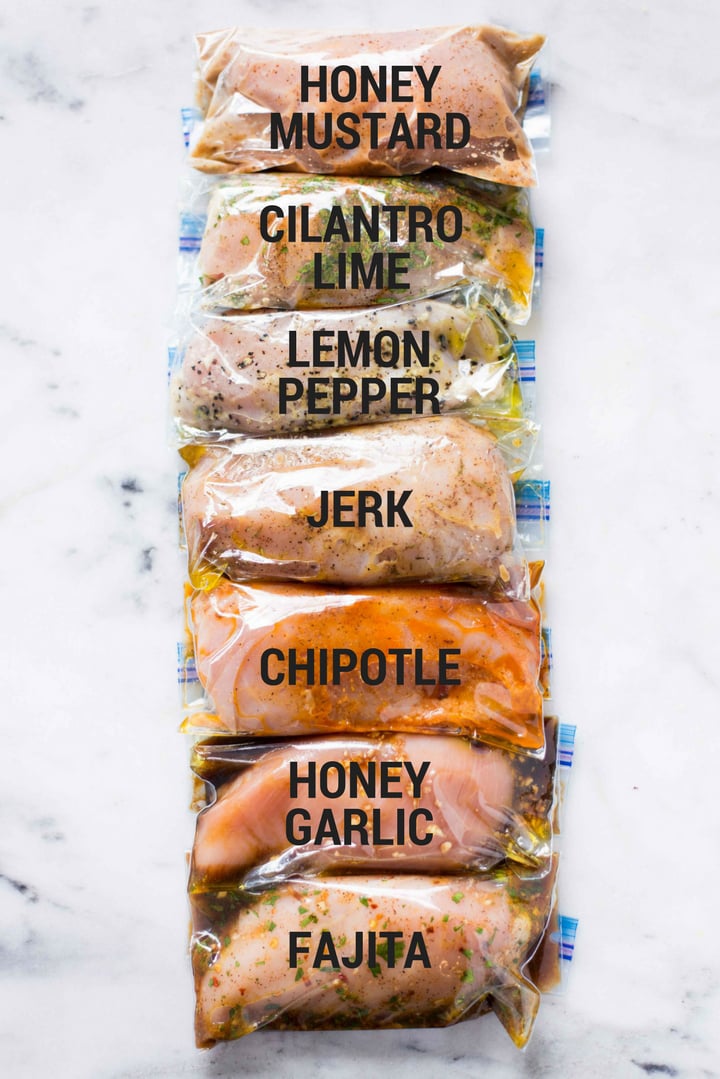
Do you avoid chicken because it’s so boring, chewy, and bland? If so, I have really good news for you. The fix for this is to marinate your chicken. Marinating chicken makes SUCH a difference for your tastebuds and for the texture and juiciness of the meat. This means you won’t get tired of eating bland, boring ol’ chicken anymore, which will make it THAT much easier to stay on track with your healthy meal planning. Woot!
While you could go and buy a pre-made marinade at the store, I highly recommend making your own homemade marinade using simple ingredients. Sadly, many store-bought marinades are full of processed ingredients, like high fructose corn syrup and artificial colors. BUT if you make your own marinade, you don’t have to worry about that. You also can save a lot of money by making your own marinades.
In this post, I’ll share everything you need to know (and didn’t even know you needed to know!) about how to marinate chicken plus you can grab my 7 favorite chicken marinade recipes to add to your recipe box.
While making a successful marinade is a fairly simple process, here are some helpful tips on how to marinate chicken to have the best results.
Okay, so now that we have the basics out of the way, let’s get to the chicken marinade recipes!
The ideal amount of time to marinate chicken is approximately 4-6 hours, though it can vary depending on the size and cut of your chicken. Since chicken is naturally a relatively tender protein, it’s not necessary to marinate long periods of time to break down tough muscle fibers, which would be the case for tougher meats, like beef. That being said, marinating the chicken even a minimum of 30 minutes will allow for a lot of added flavor to the meat and will easily penetrate into the protein for enhanced juiciness.
Oftentimes, I marinate chicken the night before I plan to cook it, which works really well to grab and use the next day, rather than to wait an additional 30-60 minutes while preparing your meal.
Like I mentioned in the tips above, if you can’t get to cooking your marinated chicken within two days, however, you can also freeze the chicken in the marinade to be used later. That’s a benefit of using the freezer safe bags to marinate because you can just toss them right into the freezer for later. Then, when it’s time to cook, thaw the meat and cook.

A serving size of chicken is 3 ounces which is roughly the same size as the palm of your hand or a deck of playing cards. Generally speaking, one chicken breast yields about two servings, but the size of chicken breasts can vary. For the recipes in this post, I only have one chicken breast pictured, but the marinade is good for two chicken breasts (which is roughly equal to a half of a pound). For families looking to marinate chicken breasts (1 pound), you can easily double the recipes provided.
The cook time will vary slightly with the size of the chicken breast, but there are some basic guidelines you can follow. The major point when cooking chicken is that it reaches an internal temperature of 165 degrees Fahrenheit so that it is safe to eat. We want it at 165 — no lower (eww) and, preferably, no higher so that it’s not dry and chewy. You’ll want to cook the chicken until the juices are clear when you cut into the thickest part of the breast.
If you don’t have a digital thermometer (LOVE), here are some tips for how to know when chicken is cooked.
Yes, it is possible to marinate chicken for too long, especially if your marinade contains an acidic ingredient, like lemon juice or vinegar. When chicken is marinated too long, it can actually become tougher, which isn’t ideal. Typically, you’ll want to keep your chicken marinating for no more than 2 days in the refrigerator to avoid marinating your chicken for too long.
If you can’t get to cooking your marinated chicken within those 2 days, you can freeze your chicken, in the marinade, and then thaw when you’re able to cook it right away.
Typically speaking, you’re going to want to cook your chicken within 2 days of marinating, preferably within 24 hours. But, if you aren’t able to cook it within that timeframe, you can freeze your marinated chicken. The easiest way to freeze the marinated chicken is to already have it marinating in a freezer-safe sealable bag or container. For less than one pound of chicken, I use these quart size Ziploc bags and for anything larger, I use these gallon size Ziploc bags. That way, I can just toss it in the freezer if I don’t get around to cooking it.
In fact, you can even freeze marinated chicken immediately upon making the marinade. Then, allow it to thaw in the fridge for a day and it will marinate as it thaws. Each of the recipes in this post work perfectly for freezing ahead of time. These marinades will keep well in the freezer for up to 3 months.
If your chicken is already frozen and you plan to keep it frozen, don’t thaw it. Instead, add the marinade to the frozen chicken and it will marinate as it thaws at a later date.
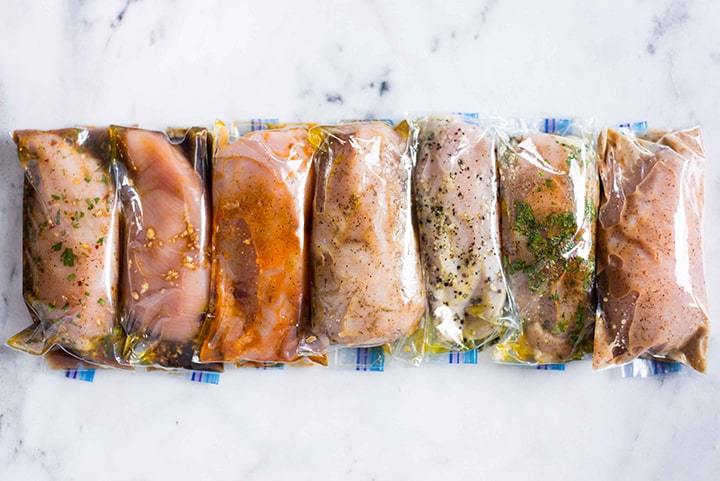
Okay, now I hope to have you excited to marinate you chicken to have moist, flavorful, and super tender chicken! To get you started, I’ve got 7 great chicken marinade recipes that i use all the time and absolutely love. Below, you’ll find:
You can either click on the recipe that sounds best to jump right to it or scroll through to get an idea of all the recipes. Happy marinating!!
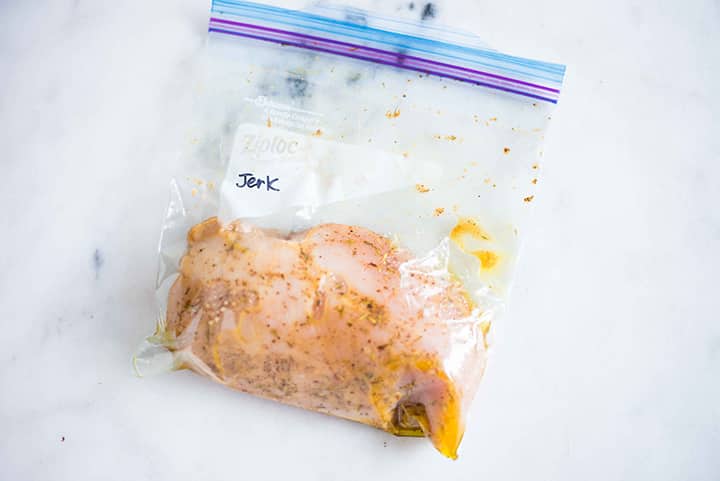
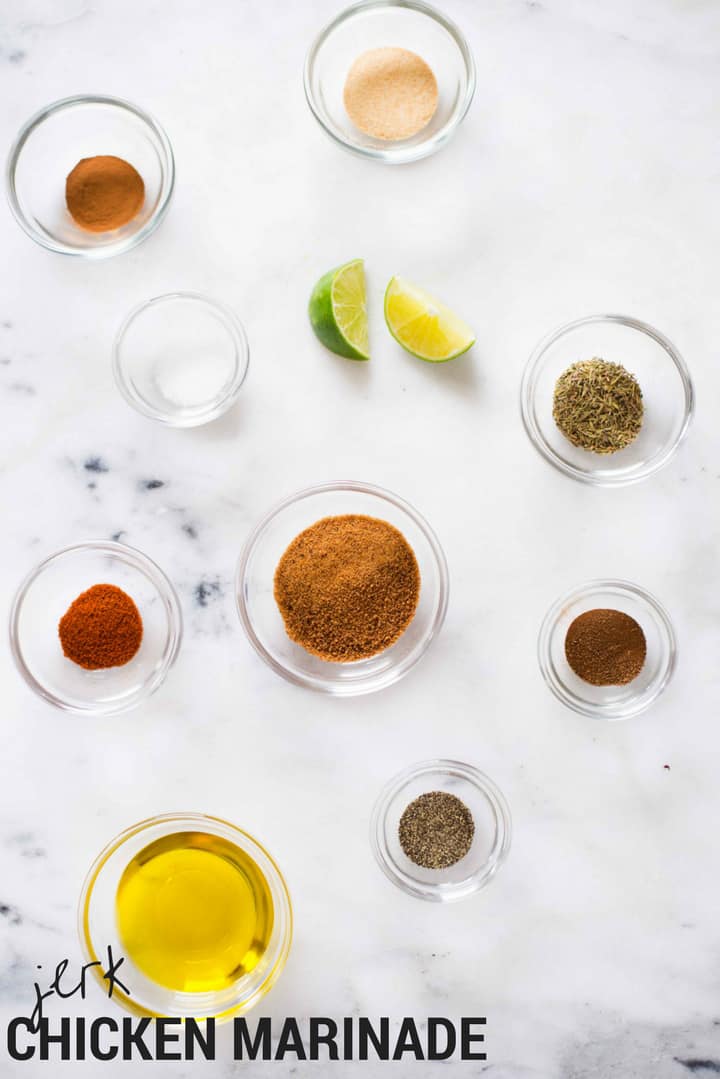
This easy Jerk Chicken Marinade is Caribbean-inspired and full of spice and flavor. A great side for this chicken would be these Baked Zucchini Fries.

This easy jerk chicken marinade is Caribbean-inspired and full of spice and flavor.
Add the thyme, allspice, coconut sugar, sea salt, black pepper, garlic powder, cinnamon, cayenne, olive oil, and freshly squeezed lime juice in a mixing bowl. Stir to combine.
Add the chicken to a 1 quart freezer-safe sealable bag, followed by the jerk spice marinade. Press the air out of the bag and seal tightly, making sure to press the marinade around the chicken to coat.
Recipe makes enough marinade for 2 boneless, skinless chicken breasts (approx. 1/2 pound). For 1 pound (approx. 4 breasts), you can double the recipe).
Nutrition facts are for marinade only and do not include chicken breast.

Make this Cilantro Lime Chicken Marinade for an easy and flavorful marinade Click here for the recipe. This recipe would pair well with these Roasted Sweet Potatoes.

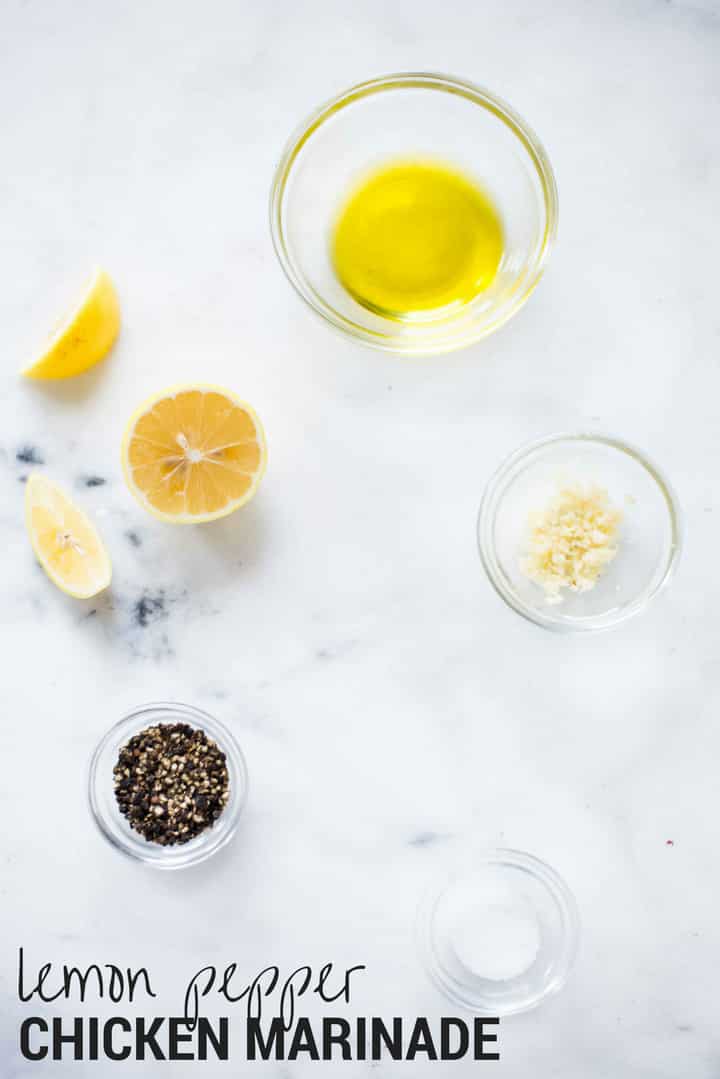
This easy Lemon Pepper Chicken Marinade is made healthier without breading or butter, and has lemon zest for a delicious lemon flavor. Pair this marinated chicken with this Lemon Snap Peas recipe for a light and refreshing dinner.

This easy Lemon Pepper Chicken Marinade is made healthier without breading or butter, and has lemon zest for a delicious lemon flavor.
Recipe makes enough marinade for 2 boneless, skinless chicken breasts (approx. 1/2 pound). For 1 pound (approx. 4 breasts), you can double the recipe).
Nutrition facts are for marinade only and do not include chicken breast.

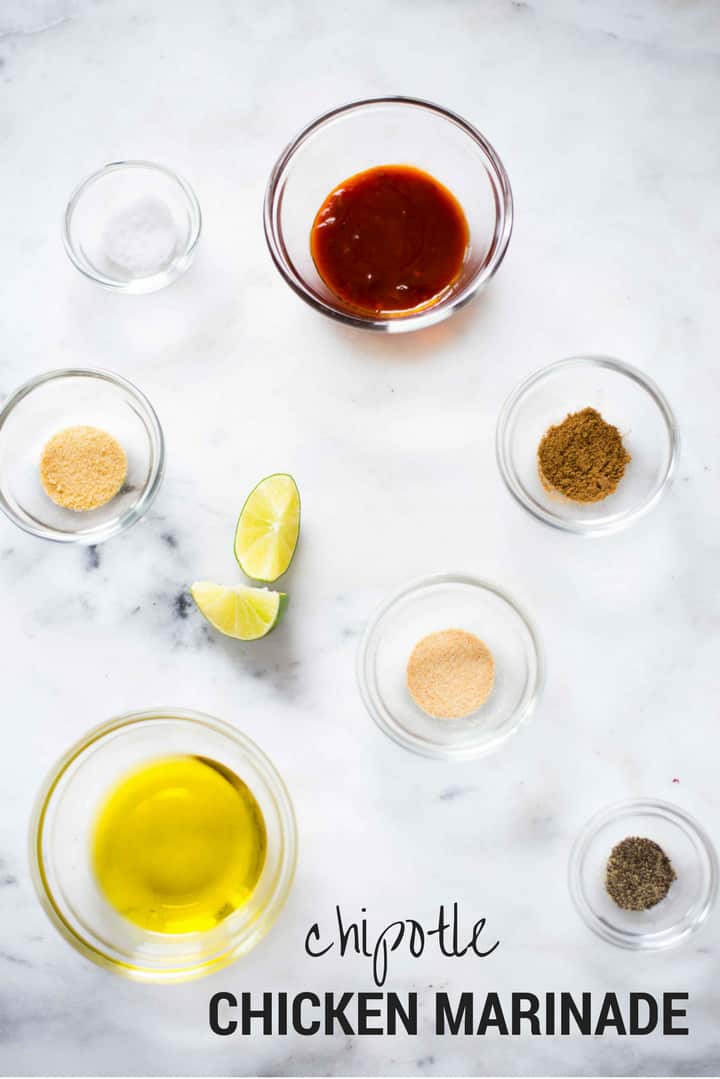
This Chipotle Chicken Marinade is perfectly spicy with lots of flavor. Serve this recipe with these Sweet Potato Fries.

This Chipotle Chicken Marinade is perfectly spicy with lots of flavor.
Recipe makes enough marinade for 2 boneless, skinless chicken breasts (approx. 1/2 pound). For 1 pound (approx. 4 breasts), you can double the recipe). Nutrition facts are for marinade only and do not include chicken breast.
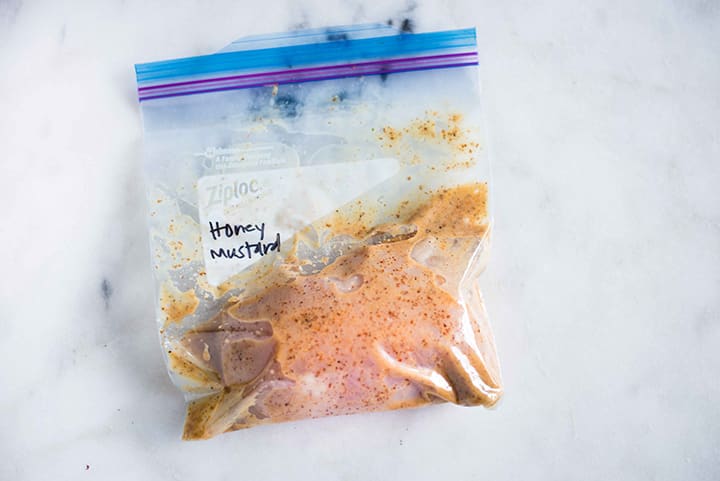
Make this Honey Mustard Chicken Marinade for an easy and flavorful marinade Click here for the recipe. This marinated chicken goes great with these Parmesan Roasted Green Beans.

This easy Fajita Chicken Marinade has tons of flavor and is perfect to make homemade fajita chicken. This marinated chicken goes great with this Cilantro Lime Rice recipe.

This easy Fajita Chicken Marinade has tons of flavor and is perfect to make homemade fajita chicken.
Add the freshly squeezed lime juice, pineapple juice, low sodium soy sauce, minced garlic, cumin, paprika, crushed red pepper flakes, sea salt, black pepper, chopped cilantro, and olive oil in a mixing bowl. Stir to combine.
Recipe makes enough marinade for 2 boneless, skinless chicken breasts (approx. 1/2 pound). For 1 pound (approx. 4 breasts), you can double the recipe).
Nutrition facts are for marinade only and do not include chicken breast.

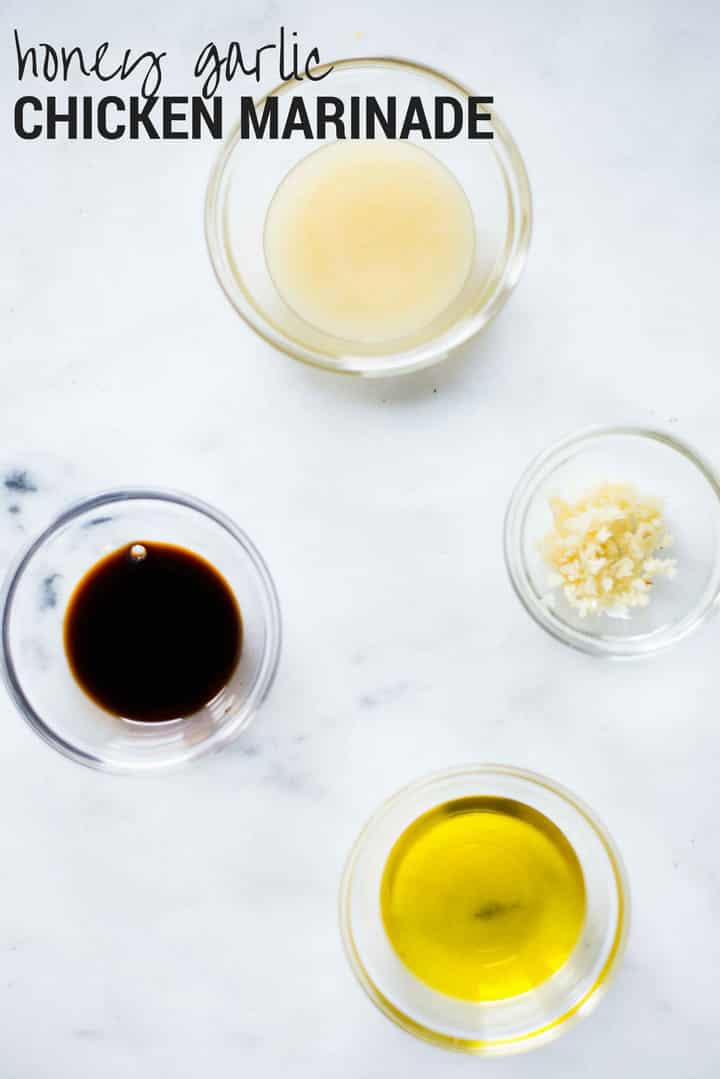
This super easy Honey Garlic Chicken Marinade requires only 4 ingredients for amazing honey garlic flavored chicken. Make this chicken recipe with this Roasted Broccoli recipe for an easy, healthy, and delicious meal.

This super easy Honey Garlic Chicken Marinade requires only 4 ingredients for amazing honey garlic flavored chicken.
Recipe makes enough marinade for 2 boneless, skinless chicken breasts (approx. 1/2 pound). For 1 pound (approx. 4 breasts), you can double the recipe).
Nutrition facts are for marinade only and do not include chicken breast.
This post contains affiliate links for products I use regularly and highly recommend.
The post The 7 Best Chicken Marinades For Juicy Chicken appeared first on A Sweet Pea Chef.
